Showing posts with label NY Times. Show all posts

Tuesday, May 12, 2009

Dom DiMaggio Career .298 Hitter


Nice NY Times tribute to Dom Dimaggio's 34 game hitting streak in 1949. They have quotes from Dom that set the record straight about the famous Joe Dimaggio catch that ended his streak. He has his regrets, though, about not being a career .300 hitter.

It would have meant so much. Enos Slaughter hit exactly .300 in his career — and he’s in the Hall of Fame. Why? Did he hustle any more than I did? Did he have a better arm than I did? Did he run the bases any better than I did? Did he play defense as well as I did? Who knows? All I needed was 12 more hits — only about one per season — and I would have had a .300 average.

Saturday, May 2, 2009

In Japanese custom, it is very important, the toilets


Remember when the Seibu Lions received $51,111,111 from the Red Sox as part of the posting fee for Dice-K? 2 years later, NY Times investigated what they did with all that loot.

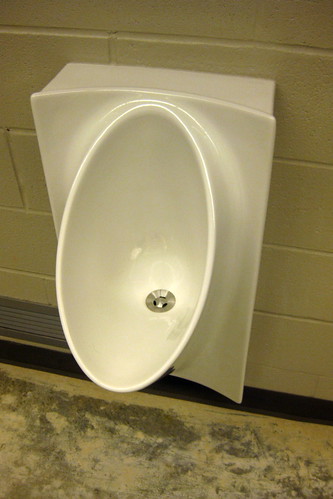
Whereas the old facilities were dingy concrete latrines, state-of-the-art urinals line the men’s rooms along with high-tech hand dryers built into the bright blue and white tile — the team colors. But the main attractions are the new toilets with TotTo’s Warmlet seats in stalls with floor-to-ceiling doors.

Each stall in the women’s bathrooms holds a Toto Washlet, a toilet and bidet in one unit. These $1,500 fixtures provide a luxurious experience for fans, who may spend their time in the restrooms contemplating the full extent of Matsuzaka’s legacy with the Lions.

“It looked like a women’s room in a nice hotel with the vanities and sinks,” said Tere Garcia-Pena, visiting from Manhattan with her husband, Miguel. “It was just so nice and clean, I felt like I just wanted to keep going in there.”

Takahashi, who studied English in Philadelphia and used to visit Veterans Stadium, said most of the money the Lions received from the Red Sox in January 2007 was used for the renovations the last two seasons.

Forty percent — more than $20 million — went to taxes. Of the rest, $25 million paid for stadium upgrades and $5 million was used to sign players who helped the Lions win the 2008 Japan Series.

Wednesday, April 22, 2009

413 at old Yankee Stadium in 1966

Richard Sandomir /NY Times thinks the Yankees should raffle away their empty seats. At the end of his article, there's also a remarkable account of a Yankee game in 1966 that had a measly attendance of 413. I can't believe Red Barber was later fired for talking about the empty stadium.

This early season’s why-aren’t-they-selling-out situation sends us back to the end of the 1966 season. No, it’s not as bad as all that when the Yankees won 70 and finished last.

But Red Barber gazed upon the absence of humanity in the old, pre-renovation stadium and told his radio listeners, according to his recollection in one of his books: “I don’t know what the paid attendance is today — but whatever it is, it is the smallest crowd in the history of Yankee Stadium.”

By the time he moved onto the TV side, he announced the paid crowed: 413. By order of someone with the Yankees, cameramen were told not to pan around to the vast wasteland.

Barber was dismissed soon after for reporting the obvious.

Tuesday, April 21, 2009

NY Baseball teams have trouble selling expensive seats


Ken Belson / NY Times offers a bleak picture of the new ballparks in NY. There are just tons of empty seats near homeplate because the tickets are just too damn expensive and remain unsold. The kicker is that many fans are getting rid of their tickets online for below face value. Ouch!

Unable to sell season-ticket plans for about 100 of their best seats, the Mets have been auctioning them off one game at a time. At least one fan took the bait, paying $7,500 for two seats behind home plate on opening night.

The Mets have suffered the indignity of watching a court-appointed trustee sell the two season tickets bought by Bernard L. Madoff, the financier who admitted to running a multibillion-dollar Ponzi scheme that counted the team’s principal owner, Fred Wilpon, as one of its victims.

An auction for the seats concluded on eBay Tuesday night, with the winning bid coming in at $38,100, considerably below their face value.

Neither team seemed worried that some of the premium seats — any seat that comes with an amenity, like waiter service or access to a dining club — were unfilled. Some of them could have owners who simply did not show up, which hurts food, parking and merchandise sales. Other seats may be part of partial season ticket plans that did not include games played last week.

“If someone’s not there at the moment, that doesn’t mean it’s unsold,” said Dave Howard, the vice president for operations for the Mets. So far, he said, fans are spending about 60 percent more on food, beverages and merchandise than they did at Shea Stadium. “There’s a lot of circulation in the ballpark.”

Many fans with tickets are trying to recoup what they can by selling some of them online well below face value. More than 10,000 tickets (about 20 percent of the ballpark) for the Yankees’ game against the Oakland Athletics on Wednesday were available, a handful for as little as $5, according to FanSnap.com, which scans the Web sites of five dozen ticket resellers.


If I were the Mets and Yankees, I would immediately lower the prices on these tickets and refund money to all season ticket holders to make up the difference. If they lose revenue, at least they got fannies in the seats. It's an awful sight to see seas of empty seats at a brand new stadium.

Monday, April 20, 2009

New Yankee Stadium shorter in right field?


Despite claims by the Yankees that the field dimensions are exactly the same as the old Yankee Stadium, findings by Greg Rybarczyk show that the right field wall is actually 5-10 feet shorter in right field.

Rybarczyk, whose findings were first reported by the Web site WasWatching.com, studied satellite photographs of the 2008 version of the Yankee Stadium field and overlaid them on photographs of the new Yankee Stadium.

He discovered that left field is almost precisely the same (despite another scoreboard there) and center field is a bit deeper than before, but right field is significantly different. To Rybarczyk, the famed short porch is actually shorter.

The Yankees’ president, Randy Levine, declined to be interviewed about the ballpark’s design. But the club has maintained that the field is oriented in the same direction, and that the dimensions and height of the fence are exactly the same as before. That may be true in the areas listed on the fence — in the corners, in front of the bullpens and in center field — but there are no dimensions listed near the scoreboards.


[Tyler Kepner/ NY Times]

Wednesday, April 15, 2009

Camera obstruction behind home plate at Yankee Stadium

A big complaint about the new Yankee Stadium is that the camera angle behind home plate is obstructed by netting [NY Times].

But the Yankee Stadium angle is the most nettlesome one, which may force YES (or ESPN or Fox) to minimize their use of the camera position, no matter how important.

During the exhibition game at the stadium against the Cubs on April 4, the supporting wires and netting formed a fishnet shroud over the camera shot. It’s not as bad a view as the one spectators will get from the bleacher seats flanking the Mohegan Sun Sports Bar and bleacher cafe, but it is nonetheless a jolting shift from the unimpeded shot in the old stadium.

On replays of Mark Teixeira’s two home runs, the home plate camera was used to show the balls soar into the stands. As it zoomed in, the netting grew increasingly vivid and annoying.

The home plate view, combined with the omission of two traditional low camera positions that looked up the baselines at the old stadium, cannot produce an optimum broadcast.


To be honest, I've never been a big fan of the behind the home plate camera angle to begin with. It's still odd that the architects couldn't resolve this problem during the construction of the stadium.

Pelfrey over-worked in 2008?


Bob Shpigel of NY Times writes about a theory behind Pelfrey's struggles this season. I feel it's a little early in the season to tell if he has a dead arm or if it just might be that Pelfrey is over-rated.

The Sports Illustrated writer Tom Verducci developed a theory that any pitcher younger than 25 who increases his innings total by 30 or more from the previous season has a greater risk of injury or a decline in his performance. He counts Pelfrey among the 10 prime candidates for a regression this season, along with Cole Hamels (bothered by elbow problems), Jon Lester (0-2, 9.00 E.R.A.) and Tim Lincecum (0-1, 7.56 E.R.A.).

Of the 25-year-old Pelfrey, Manager Jerry Manuel said Monday night, “I haven’t seen his real good stuff yet,” then speculated that he could be going through a dead-arm period, which is rare at such an early stage of the season.

“I don’t know if that’s the case, but I just haven’t seen some of the stuff he showed last year,” Manuel said. “We’re going to sit down and see if there’s anything possibly wrong with him. We’ll watch him a little bit, maybe give him an extra day’s rest here and there. See if we can get that life back. I just haven’t seen the life in those pitches.”

Tuesday, April 14, 2009

Avoiding the "S" topic


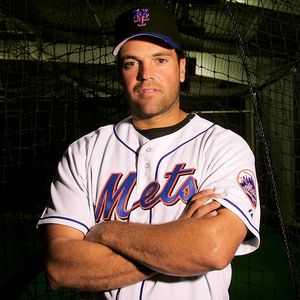
There's been allegations about Mike Piazza's possible steroid use in the news recently thanks to Jeff Pearlman's new book and rumors about him written in blogs. Much like Mark McGuire, it appears that Mike Piazza is just ducking away from any media attention these days, probably to avoid talking about the "S" topic. Kinda sad.

Piazza, meanwhile, was nowhere to be seen. Escorted by security, he went from the field to the stadium tunnel. His plan to avoid the news media was only briefly interrupted, by two questions from a television news reporter about the new stadium.

It was unclear if Piazza’s reluctance to talk was connected to allegations of steroid use in a recently published book, “The Rocket That Fell to Earth,” by Jeff Pearlman. The book is about Roger Clemens, but in one section Pearlman writes that Piazza confided to unidentified reporters during his career that he had used performance-enhancing drugs.

No other information in the book backed up the assertion. Since the book was published, Piazza has declined several requests for comment.

“He wasn’t looking for any attention,” Jay Horwitz, the Mets’ vice president for media relations, said when asked why Piazza did not want to talk.

“He said, ‘I’m a private person now, I have a family, I’m raising my kids, my wife’s having a baby and I want to stay in the background.’ ”


[Joshua Robinson of the NY Times]

Sunday, April 12, 2009

Toilet statistics at Yankee Stadium and Citi Field


It must be a slow week at the Times. John Branch wrote about the number of women's and men's toilets at the new Yankee Stadium and Citi Field. I was actually astounded by how few bathrooms there are for such a big stadium. So only 369 women's toilets were built for a stadium seating 52,325?

The new Yankee Stadium, with a capacity of 52,325, needed a minimum of 358 women’s toilets and 176 men’s fixtures, of which no more than half could be urinals, according to the city Department of Buildings.

Generally, once the minimum requirements are reached, the mix of toilets can be tailored to the building’s needs. Studies show that baseball crowds lean slightly male. Stadium builders tend to meet the requirements and add a bunch of urinals.

The Yankees and their architects, Populous (formerly HOK Sport Venue Event, which also designed Citi Field), gave Yankee Stadium 369 women’s toilets, and 98 toilets and 298 urinals for men, according to the buildings department. Another 78 fixtures are in unisex bathrooms, designed for families or in luxury suites.

Citi Field, with a capacity of about 45,000, was required to have 303 women’s toilets and 152 men’s fixtures. It was designed with 374 women’s toilets, and 111 toilets and 240 urinals for men.

At the new Meadowlands football stadium, where New Jersey dictates the use of the National Standard Plumbing Code, requirements called for at least 420 toilets for women and 277 fixtures for men.


[NY Times]

Picture from Flickr [Wallyg]